
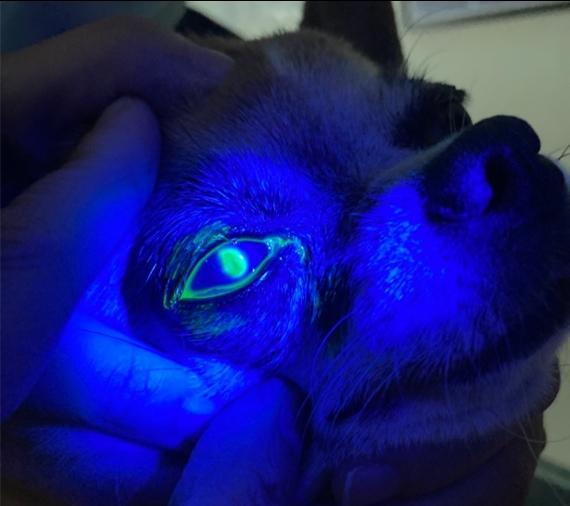
A 2024 experimental study published in Frontiers in Veterinary Science investigated the effects of topical cross-linked hyaluronic acid (X-HA) on corneal wound healing using a controlled animal model. The research compared X-HA eye drops with amniotic membrane extract eye drops (AMEED) and saline in the treatment of superficial corneal ulcers.
In this study, researchers created standardized superficial corneal epithelial defects in 30 rat eyes, which were then randomly assigned to one of three treatment groups. Each group received topical applications every 12 hours for 72 hours. The investigators evaluated healing through multiple parameters, including reduction in ulcer size, speed of epithelial regeneration, degree of corneal vascularization, and histological tissue quality.
The findings showed that cross-linked hyaluronic acid significantly improved corneal healing dynamics compared to both the amniotic membrane extract and saline control groups. Eyes treated with X-HA demonstrated:
- Faster reduction of corneal defect size, particularly noticeable within the first 24–48 hours
- Accelerated re-epithelialization, indicating quicker restoration of the corneal surface
- Lower levels of corneal vascularization, suggesting a more stable and less inflammatory healing response
- Improved epithelial organization and tissue integrity on histological examination
In contrast, the AMEED group did not show statistically significant improvement over saline in most healing parameters, indicating limited efficacy in this experimental setting.
Main conclusion
The authors concluded that cross-linked hyaluronic acid has a clear positive effect on corneal epithelial repair, likely due to its enhanced ability to maintain hydration, support epithelial cell migration, and provide a stable protective layer over the ocular surface. These properties contribute to a more favorable healing environment in superficial corneal ulcers.
Relevance to veterinary ophthalmic use
Although this was an animal model study (rats) and not a clinical trial in dogs or cats, the results support the broader scientific rationale for using advanced hyaluronic acid formulations—such as cross-linked HA eye drops—in managing corneal surface injuries. The enhanced residence time and viscoelastic properties of cross-linked HA may explain its observed benefits in promoting epithelial recovery.
Source
Frontiers in Veterinary Science – Cross-linked hyaluronic acid and corneal ulcer healing (2024)
Pet eye drops
Share information and details about these products


