
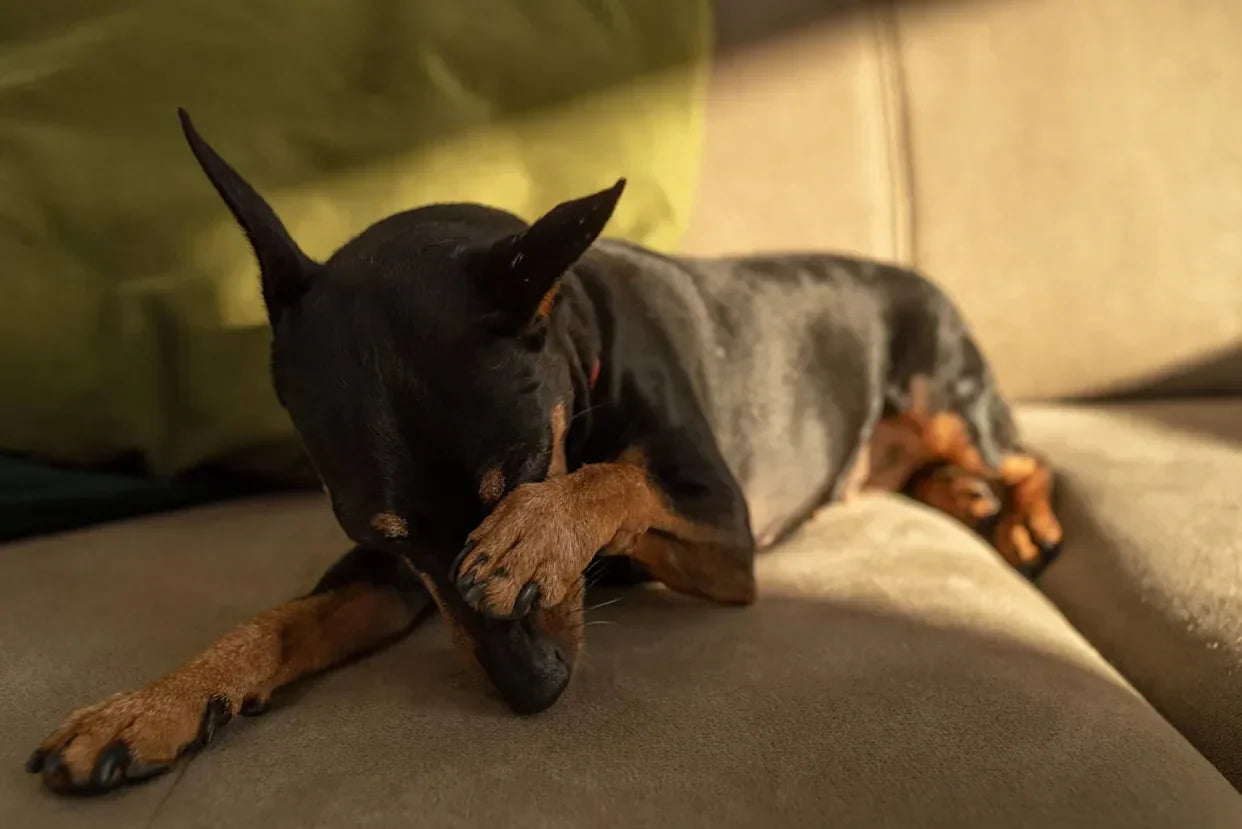
Dry eye syndrome is not only a human condition. In veterinary medicine, similar tear film disorders are commonly seen in dogs, cats, and horses, where insufficient tear production or rapid tear evaporation leads to chronic ocular surface irritation and discomfort.
In humans, the NHS describes dry eye as a condition where the eye surface becomes irritated due to reduced tear quantity or poor tear stability. The same physiological principle applies across animal species: the tear film is essential for maintaining a healthy, protected corneal surface.
How dry eye affects animals
In pets and horses, tear film dysfunction can lead to:
- Ocular redness and chronic irritation
- Increased blinking or eye rubbing
- Mucoid or watery discharge
- Corneal dryness and increased risk of ulceration
- Reduced ocular comfort and light sensitivity
Dogs are particularly prone to keratoconjunctivitis sicca (KCS), while horses may develop evaporative tear film instability due to environmental exposure and large ocular surface area. Cats can also suffer from tear film imbalance, often secondary to viral or inflammatory conditions.
Why tear film stability matters
The tear film is not just water—it is a structured protective layer composed of lipids, mucins, and aqueous components. When this system becomes unstable, the corneal surface is exposed, leading to inflammation, discomfort, and delayed epithelial recovery.
This is why modern veterinary ophthalmology focuses not only on stimulating tear production but also on improving tear film quality and retention time on the ocular surface.
Role of hyaluronic acid in ocular surface support
Hyaluronic acid (HA) is a naturally occurring biopolymer widely used in ophthalmic lubricants because of its:
- High water-binding capacity
- Viscoelastic protective properties
- Ability to support corneal epithelial hydration
- Surface-coating and lubrication effects
Clinical and experimental studies in veterinary ophthalmology have shown that HA-based eye drops improve ocular comfort and tear film stability, even if they do not directly increase tear production.
BioHAnce™ technology: cross-linked hyaluronic acid
Remend® BioHAnce™ uses cross-linked hyaluronic acid, an advanced form of HA designed to enhance residence time on the ocular surface.
Compared with standard hyaluronic acid, cross-linked HA is designed to:
- Remain longer on the cornea
- Form a more stable protective layer
- Improve lubrication persistence between applications
- Support a more consistent ocular surface environment
This is particularly relevant in chronic conditions such as canine KCS, feline dry eye-related disorders, and equine ocular surface irritation, where long-term surface protection is essential.
Supporting the ocular surface in daily veterinary care
Based on current veterinary ophthalmology evidence on hyaluronic acid, the most consistent benefits are related to:
- Improved ocular comfort
- Enhanced tear film stability
- Protection of the corneal epithelium
- Supportive environment for natural healing processes
Remend® BioHAnce™ is designed to provide this supportive ocular surface environment across species, helping maintain comfort in pets and horses affected by tear film dysfunction.
Source (human reference for dry eye definition)
Pet eye drops
Share information and details about these products


