
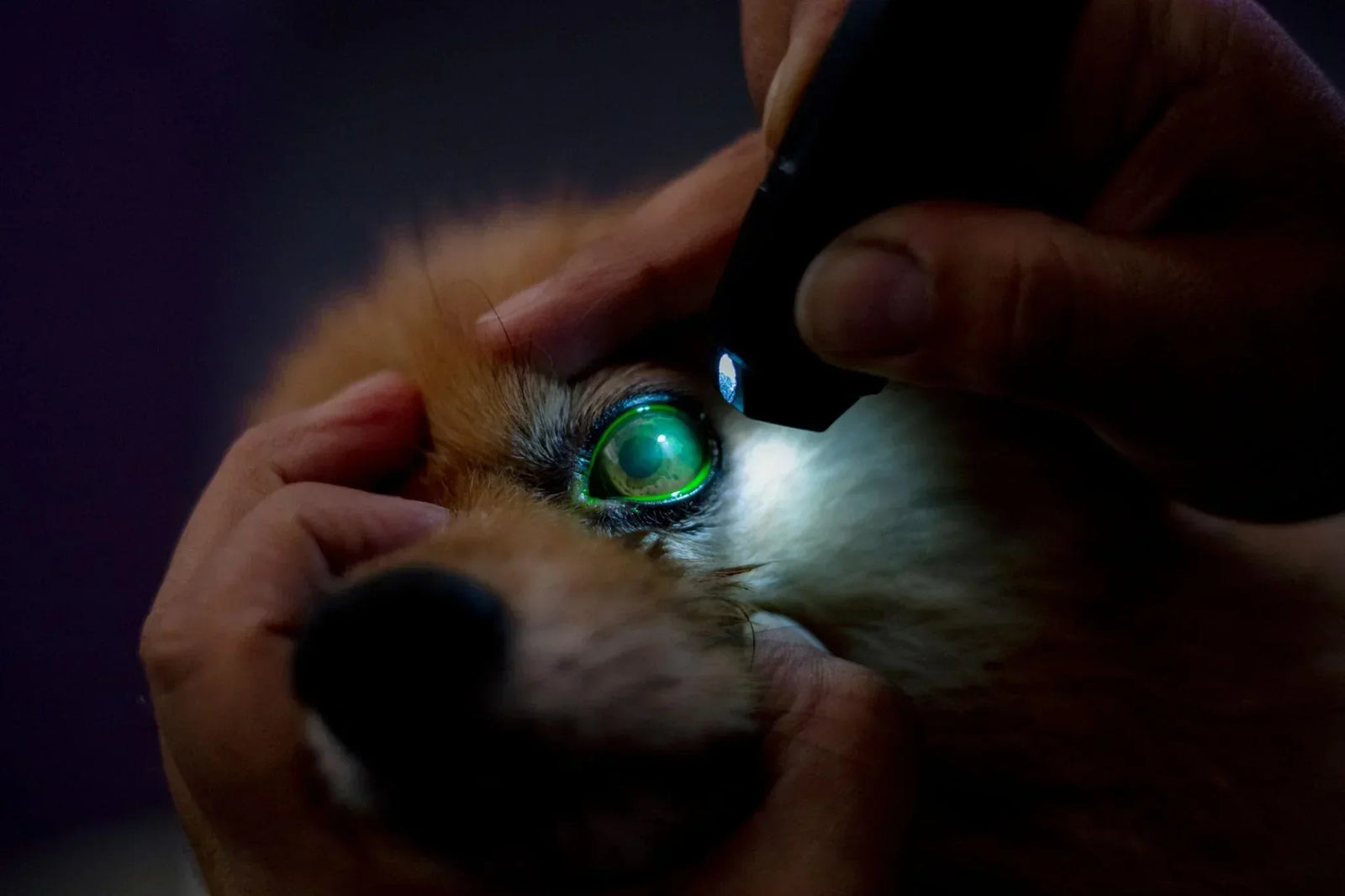
A study published in Cornea investigated whether high-concentration hyaluronic acid (2.3%) could improve healing of superficial corneal erosions compared with commonly used antibiotic treatments. The researchers compared hyaluronic acid eye drops, chloramphenicol eye drops, chloramphenicol ointment, and no treatment in a controlled rabbit model of corneal injury.
Researchers created standardized 6-mm corneal epithelial defects in 23 rabbit eyes. The animals were randomly assigned to one of four groups:
- Chloramphenicol eye drops
- Chloramphenicol ointment
- Hyaluronic acid 2.3%
- Untreated control
Treatments were applied every eight hours until complete corneal re-epithelialization occurred. The healing process was monitored using fluorescein staining and serial photography, allowing the researchers to accurately measure the reduction in wound size over time.
The study found that the three treatment groups showed very similar healing times.
- Corneal wounds treated with chloramphenicol drops, chloramphenicol ointment, or hyaluronic acid healed in approximately 72–75 hours
- The untreated control group healed significantly faster, averaging 51 hours
- No statistically significant differences were found among the three active treatment groups themselves
The authors concluded that high-concentration hyaluronic acid did not accelerate healing of uncomplicated superficial corneal erosions in this rabbit model. Similar results were observed with both antibiotic formulations. Interestingly, the untreated corneas healed more quickly than those receiving treatment.
The researchers suggested that when managing simple corneal erosions, treatment selection may be guided by factors such as comfort, lubrication, and infection prevention rather than expectations of faster epithelial closure.
Although this study is often cited in discussions about hyaluronic acid and corneal healing, it is important to note that it evaluated standard high-concentration hyaluronic acid, not cross-linked hyaluronic acid.
Cross-linked hyaluronic acid technologies, such as BioHAnce™, are specifically engineered to remain on the ocular surface longer, creating a more durable protective layer over damaged corneal tissue. Because of these formulation differences, results obtained with conventional hyaluronic acid cannot be directly applied to cross-linked HA products. Subsequent studies investigating cross-linked hyaluronic acid have reported more favorable outcomes for corneal wound healing and ocular surface protection.
Source
Pet eye drops
Share information and details about these products


